Planning for windows and doors in Cheshire
Most of the time, when we visit for a door or window replacement survey, we can give homeowners good news. In Cheshire, you usually do not need planning permission to replace your windows and doors, as this is covered by permitted development rights. We have installed thousands of frames in Chester, Crewe, Sandbach, Alsager, Winsford, and nearby villages, and almost all of those jobs only needed proper installation and a building regulations certificate.
But there are exceptions worth mentioning. Cheshire has many protected streets. Cheshire East has 76 conservation areas, from the whole of Knutsford town centre to small places like Lower Peover and Bollington. Cheshire West and Chester has 96, many of which include regular residential streets, not just historic landmarks. It also has thousands of listed buildings, and some areas are managed by the National Park Authority instead of the council. This means a well-meaning homeowner can easily receive an unexpected letter.
We often notice a difference between what people worry about and what the rules really say. Some customers think living in a conservation area means they cannot have anything modern, but that is usually not true. Others believe that if their neighbour installed white uPVC windows last year, they can do the same, but this can sometimes lead to costly mistakes.
We will cover what you can do under permitted development, what changes if you are in a conservation area and what does not, how Article 4 directions work and why the front of your house is important, why listed buildings are treated differently, which authority to contact based on your postcode, and the building regulations that apply to every installation, no matter the heritage status.
How safe are you with window swaps?
Let’s start with the basics, since this applies to most people. If your house still has its usual permitted development rights, you do not need planning permission to repair, maintain, or improve your windows and doors, or to add new ones that look similar to the originals. Internal secondary glazing also does not need planning approval.
A few conditions can surprise people. A new bay window is considered an extension, not just a window, so it follows extension rules. Any new window on the side of an upper floor must be obscure-glazed and either fixed shut or placed more than 1.7 metres above the floor. This often comes up in Crewe and Winsford when someone wants more light on a landing.
Two more things to watch out for. Flats don't have the same permitted development rights as houses, so changing a window style in a flat may require permission, even if you are not in a conservation area. Also, if your house was built after 1974, the original planning permission might include a condition that removes permitted development rights. Cheshire West and Chester warns homeowners to check this using their online search. We have seen these conditions on several newer estates, and they are easy to miss because the houses do not look historic.
Our advice is straightforward: assume you are okay, but take 20 minutes to double-check before you commit to anything. We assume your home is a house, not listed, and hasn't lost its permitted development rights due to a condition or direction.
What a Cheshire conservation area status means
This is where the biggest misunderstanding lives. Conservation area designation on its own does not require you to apply for planning permission to replace a window or a door. is clear: the extra control on windows and doors comes from an Article 4 direction, a separate, tailored measure the council may or may not have applied to your street.
A conservation area designation does change the set of permitted development rights. In Cheshire East's conservation areas, all dormers need permission; single-storey extensions are permitted only to the rear; external cladding in stone, render, timber, plastic or tiles needs permission; and satellite dishes on chimneys or front elevations need permission. Designation also raises the bar on how any application is judged. Cheshire East will not accept outline applications in a conservation area and expects a heritage statement that identifies the location's significance and shows how the area's character will be protected.
In reality, customers in Chester’s Hoole Road, Queens Park, or Handbridge often think uPVC is completely banned, and are surprised when we explain it is more complicated. We suggest reading the conservation area appraisal for your area, as it shows which features the council cares about. If the appraisal highlights timber vertical sliding sashes with slim glazing bars as important, that is a strong sign of what will or will not be accepted, even if there is no Article 4 direction.
Article 4 directions and the front elevation rule
An Article 4(2) direction is the measure that genuinely bites on windows and doors. Where one applies, the owner must apply for planning permission for most external alterations, and windows and doors are among the works commonly covered, alongside roofs, chimneys, architectural details, porches, boundary walls and painting previously unpainted brickwork.
Two points from Cheshire East’s guidance often save our customers money. First, you usually only need to apply to parts of your home that face a road, so work at the back is usually allowed under normal permitted development. Second, these rules don't affect repairs, maintenance, or like-for-like replacements. For example, if you have timber sliding sash windows and replace them with the same style, you usually do not need to apply, even in an Article 4 area. But if you change them to a different style, like top-hung casements, you do. Article 4(2) directions apply to houses, flats and commercial buildings.
Checking your property’s status is often the hardest part. Cheshire East directs homeowners to its mapping system and Article 4(2) address list, but the guidance page was last updated in November 2018. Double-check by email or phone rather than relying only on the website. You can contact the built heritage team at built.heritage@cheshireeast.gov.uk or call 0300 123 5014. For Cheshire West and Chester, use the council’s general enquiry form to ask if your house is covered, or email their conservation and design team at conservationanddesign@cheshirewestandchester.gov.uk.
Our advice is clear: always get written confirmation. A short email saying no direction applies is much more valuable than a conversation you cannot prove later.
Listed buildings sit in a category of their own
If your home is listed, the calculation changes completely and material choice stops being a matter of taste. Historic England states plainly that replacement of windows in a listed building will always require listed building consent, and that inserting double or triple glazing into historic windows will usually require it too. The test is whether the work affects the building's character as one of special architectural or historic interest, not whether anyone can see it from the road. The listing covers the whole building, including the interior.
Careful repair usually doesn't require consent. Piecing in new timber to match a rotten cill, renewing broken sash cords with cords of the same material, and adding self-adhesive draught-proofing strips generally do not need consent. Secondary glazing is the quiet winner here. Historic England's own research finds that secondary glazing can cut heat loss as effectively as double glazing, particularly with low-emissivity glass, and performs better than double glazing on noise, while usually needing no consent when it is reversible and causes no damage to frames, panelling or shutters.
There is a real trade-off here. Secondary glazing keeps the heritage officer happy and costs less than full replacement, but you will have two sets of glass to clean, and it does not fix rotten or poorly fitting main frames. Full replacement with the right materials solves those problems but needs consent and a strong conservation case.
Making a mistake here is serious. Doing work on a listed building without consent is a criminal offence, and councils can prosecute with unlimited fines and up to two years in prison. We refuse to do work without consent, and you should be wary of any installer willing to proceed without it.
Which authority decides, and what it costs
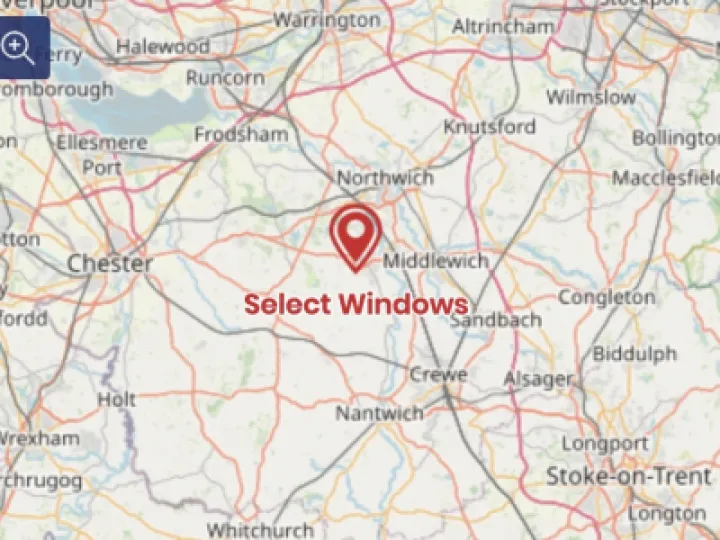
Four unitary councils cover ceremonial Cheshire, and your postcode determines which one holds your file. Cheshire East handles the east of the county, including Macclesfield, Congleton, Crewe, Nantwich, Knutsford and Sandbach. Cheshire West and Chester covers Chester, Ellesmere Port, Northwich, Winsford and Frodsham. Warrington and Halton run their own planning services.
A fifth option covers the county's far east. The Peak District National Park Authority, not Cheshire East, is the statutory planning authority inside the National Park boundary, which reaches into parts of Cheshire East around Disley, Rainow and the Wildboarclough area. Its guidance mirrors the national position that like-for-like replacement in the same design and materials usually needs no permission unless the building is listed or in a conservation area. If you are unsure which side of the line you sit on, the Authority will confirm from your postcode on 01629 816 200. Building control, incidentally, stays with the council even inside the Park.
For cost and timing, a householder planning application in England is £548 after the April 2026 increase, with a possible rise to £575 from December 2026. Listed building consent is free, which surprises many people. A lawful development certificate for proposed work costs £274 and is the official way for the council to confirm your project is permitted development. Cheshire East also says you may have to pay a fee if you only need an application because of an Article 4 direction, so check when you apply. Most applications are decided within eight weeks, but in our experience, ten to twelve weeks is more realistic once you factor in questions.
One last thing about risk: since 2024, England now has a single ten-year enforcement period for almost all breaches, replacing the old four-year rule for building works. This means unauthorised frames no longer become legal after four years.
Building regulations always apply
Homeowners often overlook this, but it applies to every replacement window and door in Cheshire, regardless of conservation status. All replacement glazing must meet building regulations, and installers have to follow current thermal performance standards.
The number that matters is set out in Approved Document L, Volume 1, Table 4.2. A replacement window in an existing dwelling must achieve a whole-window U-value no worse than 1.4 W/m²K, or a Window Energy Rating of band B, and it must be no worse than the element it replaces. It is an either-or, not both. For doors with more than 60 per cent glazing, the limit is also 1.4, with a Door Set Energy Rating band C as the alternative route. Well-specified double glazing with a low-emissivity coating, an argon fill and a warm-edge spacer bar meets this comfortably, so triple glazing is a performance choice rather than a legal necessity.
There are two ways to show you have complied. Either your installer (like Select Window Systems) is registered with a scheme like FENSA or Certass and self-certifies the work, notifies the council, and gives you a certificate, or you apply to local authority building control yourself and pay for an inspection. You cannot get a DIY certificate. When you sell your home, the buyer’s solicitor will ask for proof of compliance for any glazing installed since April 2002. Without a certificate, you may need an indemnity policy or face a price reduction at the worst time.
For heritage properties, Regulation 21 can relax energy efficiency rules if following them would harm the character or appearance of a listed building or a property in a conservation area. Building control and the conservation officer decide this on a case-by-case basis, so discuss it rather than assume you are automatically exempt.
The Future Homes Standard and the 2026 edition of Approved Document L were published in March 2026 and will take effect on 24 March 2027, mainly for new homes. We are keeping an eye on the details and will update our advice, but for any replacement job now, make sure your installer meets the 1.4 W/m²K (Band B) standard.
Getting a straight answer before you commit
To sum up, things are usually less complicated than people think. If you own a house in Cheshire that isn't listed, isn't under an Article 4 direction, and hasn't lost its permitted development rights, you can almost always replace your windows and doors without a planning application. Just make sure the new frames look similar to the originals and follow the obscure-glazing rule for upper-floor side windows. This applies to most of the homes we work on.
If you are in a conservation area, the designation itself is not usually the problem. Check if an Article 4 direction applies. If it does, it usually affects only the parts of your home facing the road and doesn't cover true like-for-like replacements. If your home is listed, you will need consent, so consider secondary glazing, and never start work without written consent.
Our main message is that checking costs very little, but not checking can be expensive. Emailing built.heritage@cheshireeast.gov.uk or conservationanddesign@cheshirewestandchester.gov.uk is free. A lawful development certificate may cost money, but it gives you certainty. An enforcement notice ten years later could mean paying for your windows twice, and for a listed building, it could even mean prosecution.
We prefer to have any awkward conversations during the survey, not after the work is done and costs have gone up. That is why you should always check heritage designations before accepting a quote. If you are thinking about replacing windows or doors in Cheshire and are unsure about the rules, send us your address and a photo of the front of your house. We will give you honest advice, direct you to the right authority, and, if you need consent, help you put together a plan with a good chance of approval. There is no obligation and no pressure to buy.
Select Window Systems accepts no responsibility or liability for any damages or costs of any type arising out of or in any way connected with your use of this website. Select Window Systems cannot be held liable for any actions taken in reliance on any published content, which is for information purposes only.
Select Window Systems
Phone: 01606 863553
Email: hello@swsonline.co.uk
Visit: Unit 2, Woodford Court, Winsford, Cheshire, CW7 2RB
Cheshire doors and windows.
Window and door installations across Cheshire.