How sliding patio doors work
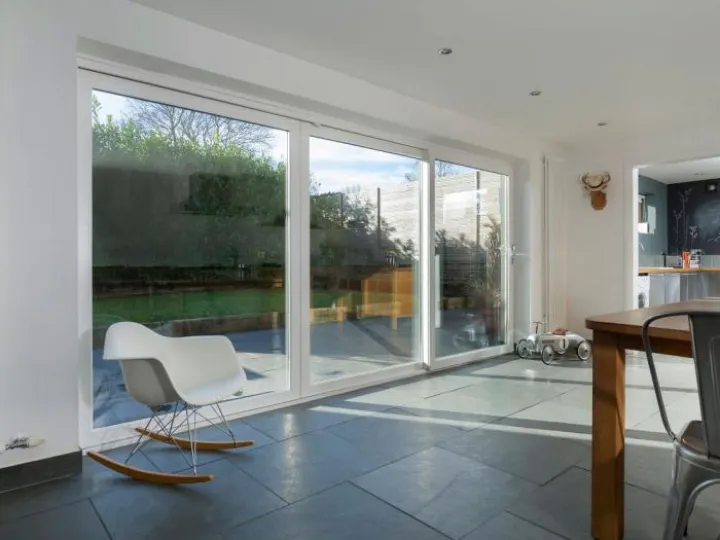
Sliding patio doors have evolved greatly from their old, draughty designs. Today, they are stylish, practical, and thermally efficient, connecting your home to a garden, terrace, or courtyard. Whether you are renovating a Victorian semi or extending a contemporary home, sliding patio doors are likely on your shortlist.
But how do they work, what types can you choose, and what should you consider before buying? We explain how sliding doors operate, the systems available, materials, thermal and security performance, and common maintenance issues. After reading, you'll be equipped to make a confident, informed decision.
How the track and roller system works
Every sliding patio door relies on a well-designed track-and-roller system. The doors move along a track, with one fixed panel and one or more sliding panels. The sliding panels glide on rollers at the bottom of the door frame. Lighter internal doors often hang from a top-mounted rail. Heavier exterior doors use both top and bottom rails to balance weight and stability. A floor channel guides the door and prevents it from swinging outward. Most systems have end stoppers to keep the panel on the rail. The door’s weight is more important than many realise, as heavier doors strain the rollers and track. Quality doors use stainless steel or reinforced nylon rollers. These remain smooth and responsive, even with large, heavy glass panels.
Single track, multi-track and pocket doors
There are two main sliding door track mechanisms: single-track and multi-track. Single-track patio doors, common in traditional homes, feature two panels that slide over each other. These are cost-effective and simple, but limit the opening to about half the door's width. Multi-track patio doors use three or more panels that slide independently. This allows a larger opening and more flexibility.
In general, sliding patio doors can be up to 6 metres wide, with panel widths up to 3 metres and a height of 2.5 metres. Another option is the pocket door. This panel slides completely into a wall recess, disappearing from view when open. Pocket doors are common in hallways, narrow passages, and open-plan spaces where a hidden door looks cleanest. Creating the wall cavity for a pocket door usually requires extra structural work.
Lift-and-slide and other mechanisms
Not all sliding doors work the same way. The lift-and-slide mechanism is a popular upgrade. It uses a handle connected to special gearing around the door sash. Turning the handle lifts the panel off its weather seal, reducing friction. Even very large, heavy panels can glide open with minimal effort. Returning the handle drops the panel and compresses the seals for a tight fit.
Another option is the tilt-and-slide door. It combines sliding with the tilt-and-turn function of many modern windows. The panel can tilt in at the top for ventilation or slide open for full access. Both systems improve on standard track-and-roller arrangements. They are worth considering if effortless operation is important to you.
Aluminium doors with slim sightlines
The material of the door frame greatly affects the appearance and performance of the sliding patio door. uPVC remains popular, affordable, and low-maintenance. It works well for standard domestic doors and offers good thermal performance. Aluminium sliding doors with slim sightlines are a premium choice. They give homeowners maximum glass and minimum frame.
High-spec sliding doors offer frames as thin as 20mm. These slim lines allow better views than bifold doors, which have smaller panels and thicker frames that fold up. Slim aluminium doors can span wide openings. With modern open-corner builds, panels can even slide from a corner without a visible post, creating a dramatic effect. Timber frames are still an option for a traditional look, with hardwoods like oak lasting well when finished and maintained.
Energy efficiency and thermal breaks
Glass is a good conductor of heat and cold, so poorly specified sliding doors often lose energy. Modern designs use energy-efficient glazing and thermal breaks to prevent this. Thermal breaks prevent cold bridging through the frame, helping sliding doors reach good U-values.
Double glazing with argon gas and low-emissivity (low-E) coatings is now standard. This minimises winter heat loss and limits summer solar heat gain. It also helps protect furniture and flooring from UV damage. For south-facing aspects, you can upgrade to solar control glass to reduce glare. Triple glazing offers even better thermal performance. Always check the U-value for sliding doors—the lower the number, the better the thermal efficiency.
Security features and locking systems
Security is crucial for any exterior door. Modern sliding patio doors are much safer than older versions. The best use a multi-point locking mechanism on the lead door. PAS 24 and Secured by Design hardware are standard on quality options. PAS 24 is a British Standard for enhanced door security, so its presence is a good sign.
Anti-lift devices stop the door panel from being forced up from the outside. Internally glazed units mean you can't remove the glass from the outside. Multi-point locks secure the frame at several points. This makes forced entry much harder than with a single latch. When comparing quotes, check for PAS 24 and ask about anti-lift and anti-jemmy features in the frame.
Common problems and how to solve them
Sliding patio doors require minimal maintenance when properly specified and installed, but issues may arise over time. The most common complaint is stiffness or difficulty sliding. This is usually caused by debris or grit in the lower track. The solution is simple—use a vacuum with a brush attachment to clean the track. Then, apply silicone-based lubricant to both tracks. Do not use oil-based lubricant, as it attracts dirt and makes things worse. If cleaning and lubrication don't help, the rollers may be worn or misaligned. Most doors have an adjustment screw at the base of the panel. A slight adjustment usually restores smooth operation.
Make the right choice for your home
Sliding patio doors are a rewarding home improvement. They fill rooms with light, connect inside and outside, and add value to your home. Their design, thermal efficiency, and easy operation also appeal to future buyers. Choose the right system for your needs. Standard uPVC sliding doors are well-suited to small budgets and modest openings. Larger aluminium systems with multi-tracks, lift-and-slide mechanisms, and slim sightlines can turn a wall into a wide glass screen. Whatever your needs or budget, Select Window Systems can help you find the best solution.
If you are ready to explore sliding patio doors for your home in Cheshire or the surrounding area, contact Select Window Systems today for a free, no-obligation quote. Call us on 01606 863553 or visit our showroom to see our range in person and speak to one of our specialists.
Select Window Systems
Phone: 01606 863553
Email: hello@swsonline.co.uk
Visit: Unit 2, Woodford Court, Winsford, Cheshire, CW7 2RB
Cheshire doors and windows.
Window and door installations across Cheshire.
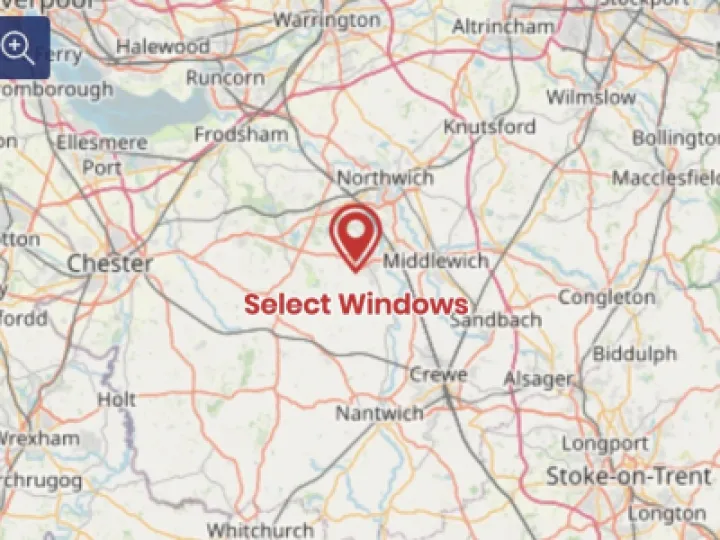
Visit Our Cheshire Showroom
Disclaimer
Select Window Systems accepts no responsibility or liability for any damages or costs of any type arising out of or in any way connected with your use of this website. Select Window Systems cannot be held liable for any actions taken in reliance on any published content, which is for information purposes only.