
How often should windows be replaced?

This is the question we hear most often, often over a kitchen table with a cup of tea, from someone who has just spotted something they can’t ignore. Maybe it’s mist between the panes, a cold draught along the sill that wasn’t there last winter, or a handle that now needs a shove.
A good window should last at least 20 years, and a top-quality one can last even longer. But what most people really need to know is that windows rarely fail all at once. They wear out in stages, and each stage calls for a different approach. Sometimes a simple, inexpensive repair is enough. Sometimes you just need to replace a single sealed unit. And sometimes, it’s not worth spending more money on an old frame.
This difference is important. Our customers across Cheshire often say the hardest part isn’t the cost of new windows, but not knowing if they really need them yet. Many worry about being pushed into a full replacement when it could wait another five years. We’ve often advised people to keep their perfectly good windows, and we’d rather do that than sell you something you don’t need.
We explain what window lifespan really means, how long uPVC, aluminium, and timber windows last in the UK, the most common warning signs we see, what to do about misted glass, what replacement costs compared to what you get in return, and how to make your windows last as long as possible. We base this on industry data, Energy Saving Trust figures, and our own experience fitting and repairing windows across the county.
What lifespan really means for a window
A window isn’t just one thing. It’s made up of a frame, a sealed glazing unit, gaskets, and moving hardware. Each of these parts ages at a different rate. The frame usually lasts the longest. A good uPVC or aluminium frame can remain strong even after the other parts have been replaced multiple times. The sealed unit, the panes of glass bonded to a spacer bar, start aging from the day it’s made. Gaskets and weather seals get hard and shrink over time. Hardware wears out depending on how often you use the window.
That’s why we don’t automatically recommend replacement just because windows are 20 years old. Age alone doesn’t tell the whole story. We’ve seen 25-year-old uPVC windows that only needed new hinges and gaskets, and we’ve seen eight-year-old windows failing because they were installed without proper drainage, letting water collect against the glass.
From what we’ve seen, it helps to think in three stages. For the first 10 years, you’ll likely only need to clean and lightly lubricate your windows. Between 10 and 20 years, hardware and seals often need some care, and you might have to replace a sealed unit. After 20 to 25 years, the whole window may start to underperform, and replacement usually makes more sense than ongoing repairs.
All of this depends on the windows being installed properly in the first place. That’s the biggest factor, and you can’t always see it from the outside.
How long uPVC, aluminium and timber last
Good uPVC windows usually last 20 to 30 years in the UK, and sometimes up to thirty-five if they’re well fitted and not too exposed. Most manufacturers offer a 20 to 25-year warranty on the frame. It’s usually the hardware and seals that wear out first, not the plastic. After about 25 years, even if the frame looks fine, its thermal performance is often behind that of newer products.
Thermally broken aluminium is the long game. Industry figures consistently put it at 40 to 45 years and beyond, and Checkatrade's guidance suggests 45 years or more is realistic. Aluminium windows do not warp, swell, or crack, and a marine-grade powder coating holds colour for decades. It costs more at the outset, and it repays that over a longer horizon.
Timber is the most variable and the most misunderstood. Softwood, left to fend for itself, can be finished in 25 years. Hardwood such as oak or mahogany, properly maintained on a five to eight-year recoating cycle, can reach 50 or 60 years and beyond, which is why so many Victorian sashes are still in service. Timber's real advantage is that individual components are repairable rather than disposable.
Here’s our simple advice: If you’re planning to stay in your home for 20 years or more, aluminium usually offers the best value over time, even though it costs more at first. If you’re on a tight budget, a well-made and properly fitted uPVC window will last about 25 years. For listed buildings or homes in conservation areas, timber is often the only option allowed.
The warning signs we see most often
Some problems are just cosmetic, while others are structural. Knowing the difference can save you money. Draughts around a closed window are often the first real sign of trouble. A good window shouldn’t let in any air except through its trickle vents. If you feel air moving along the frame, the gaskets may have hardened, or the sash isn’t pressing against them properly. Sometimes it’s just a hinge adjustment or a simple gasket replacement. Rarely, it means the frame has warped.
Sticking or stiff windows are worth paying attention to. If you have to force a window open, or it swings shut on its own, the frame may have shifted or the hardware could be worn out. Forcing it will only make things worse.
Cracks and splits in the frame are serious. Light scratches and scuffs aren’t a problem, but a real crack lets water in and can cause damp and mould. Once that happens, repairs usually don’t last.
If your heating bills are going up, it’s worth looking into the cause. About 20 to 25 per cent of a home’s heat loss happens through the windows. If one room is suddenly harder to heat, the windows could be to blame.
There’s another sign many people overlook: noise. If outside sounds have become louder over time, even though the street isn’t busier, your glazing units may have lost their gas fill.
Misted units, and when repair still works
Condensation between the panes is the issue we see most often, so it’s important to be clear about what it means. Each sealed unit has a perimeter seal, usually made of butyl, that holds a spacer bar filled with desiccant to absorb moisture inside the cavity. When the seal fails, outside air gets in, the desiccant becomes saturated, and moisture forms on the inside of the glass. Seals typically last 10 to 25 years, depending on exposure.
Here’s the key point: a misted unit can’t be properly repaired. Drilling and injection services you might see advertised may help for six to 24 months, but they don’t restore the argon fill or the thermal performance. The right solution is to fit a new sealed unit.
The good news is that this is usually a simple job. If your frames and hardware are still in good shape, replacing just the glazing units is much cheaper than replacing the whole window. Modern units with low-emissivity coatings and warm-edge spacers often perform better than the originals. We do this work regularly and are happy to give you a quote.
It’s a tougher decision when several units fail in a short time on the same side of the house. This usually means there’s an underlying problem, often water collecting because the drainage slots are blocked or inadequate. Just replacing the glass will only delay the issue.
One thing we’re often asked: condensation on the inside surface of the glass isn’t a window fault. It’s just humidity meeting a cold surface, and the solution is better ventilation, not new glazing.
What replacement costs and what it returns
Let’s be specific, because vague pricing doesn’t help anyone. Fitted uPVC casement windows generally sit between £350 and £800 each in 2026, with aluminium casements around £600 to £850 and timber from roughly £950 upwards. For a whole property, budget in the region of £4,000 to £8,000 for a three-bedroom semi in uPVC, rising to £8,000 to £15,000 for a four-bedroom detached. Cheshire pricing sits comfortably below London levels.
Here’s something most sales brochures don’t mention. If you replace single glazing with A-rated double glazing in a semi-detached house, the Energy Saving Trust says you’ll save about £140 a year, or up to £175 in a detached house. If you’re just upgrading old double glazing, the savings are much smaller—usually £30 to £60 a year.
We’re upfront with clients about this because the numbers matter. Energy savings alone won’t quickly pay for a full replacement. What you really get from new windows is comfort, no more draughts or cold spots, better sound insulation, up-to-date security, a home that’s easier to sell, and compliance with Building Regulations, which require replacement windows in England to have a U-value of 1.4 W/m²K or a Window Energy Rating of B.
Choose new windows for the comfort they bring to your home. Think of any savings on bills as a bonus, not the main reason.
Making new windows last their full lifespan
No matter what you choose, the quality of the installation matters more than the product itself. Make sure your installer is FENSA registered or has an equivalent certification, and that you get an insurance-backed guarantee in case the installer goes out of business.
After that, maintenance is easy. Clean frames with warm soapy water, not solvents or abrasives. Lubricate hinges and locks once a year with a manufacturer-approved product, but don’t use too much—extra lubricant attracts grit. Keep the drainage slots at the bottom of the frame clear, as blocked drainage is the main cause of early sealed unit failure and only takes a minute a year to prevent. Check gaskets every autumn for hardening or shrinkage and replace them early if needed.
For timber windows, recoating isn’t optional. Do it every five to eight years, or sooner if the window faces south or west, and as soon as you see any bare wood.
One habit we wish more people had is not slamming windows. A casement is made of several parts with bonded glass, and repeated slamming wears out the edge seal much faster than normal use.
Clients who follow this advice often get much longer life from their windows. Those who don’t usually see hardware and seals fail about 10 years early, which is an expense you can avoid.
Knowing when the time is right
Windows wear out in stages, and each stage needs the right response. Draughts, stiffness, and hardened gaskets usually just need repairs. A single misted pane usually means swapping out the sealed unit. Cracked frames, several failed units on the same side, or windows over 25 years old are signs that replacement is the better investment.
If you remember one thing, let it be this: don’t let age alone decide, and don’t let a single misted pane push you into replacing everything. Have someone check the frames, drainage, and hardware before you spend any money.
We’re always happy to give you an honest assessment, even if that means telling you your windows still have years left. If you’d like a professional survey of your windows in Cheshire, or a quote for replacement, call us on 01606 863553 or email hello@swsonline.co.uk for a free, no-obligation appraisal.
Select Window Systems
Phone: 01606 863553
Email: hello@swsonline.co.uk
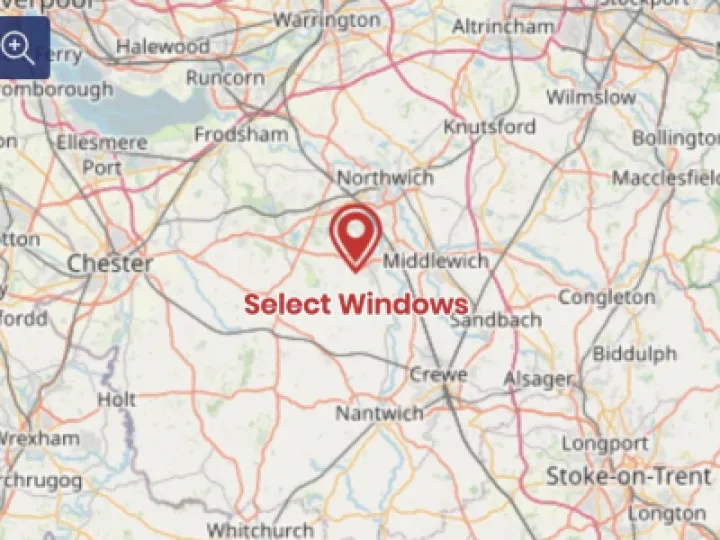
Visit: Unit 2, Woodford Court, Winsford, Cheshire, CW7 2RB
Cheshire doors and windows.
Window and door installations across Cheshire.
Visit Our Cheshire Showroom
Disclaimer
Select Window Systems accepts no responsibility or liability for any damages or costs of any type arising out of or in any way connected with your use of this website. Select Window Systems cannot be held liable for any actions taken in reliance on any published content, which is for information purposes only.